
SEMI E87 (CMS) Overview
Introduction
SEMI E87 CMS (Carrier Management Specification) is a standard specification used in the semiconductor industry to define the communication behavior between the host and the production equipment during the automatic and manual transfer of the Carrier.
The main purpose of the E87 standard is to regulate the interactive behavior between the host and the equipment during the Carrier transfer, including the Carrier transfer between the AMHS and the Load Port of the production equipment, the Carrier transfer between the internal buffer of the production equipment and the Load Port, and the Carrier transfer between the host and the equipment. The switch of Load Port Access Mode of equipment, the association between Carrier and Load Port, and the verification of Carrier ID and Carrier Slot Map.
With these specifications, the SEMI E87 CMS ensures Carrier efficiency and consistency during transfer, reducing communication errors between the equipment and the host.
Terminology
In SEMI E87 CMS, there are several key terms involved. Here are the definitions of some of them:
- Automated Material Handling System (AMHS): An automated system for storing and transporting materials in a factory.
- Carrier: Carrier, crystal boat, container used to hold substrate, such as FOUP (front open unified Carrier) and open carrier.
- Carrier ID: A unique identifier for the Carrier, usually stored in the tag.
- Load Port: The location of the interface on the equipment used to load and unload the Carrier.
- FIMS: The location of the substrate access port that opens and closes the FOUP.
- Fixed Buffer Equipment: Production equipment with only fixed Load Port and no internal buffer for Carrier storage. During production and processing, the substrate is directly drawn from the Carrier located on the Load Port.
- Internal Buffer Equipment: Equipment using internal buffer.
- Internal Buffer: The location used inside the equipment to store the Carrier, excluding the Load Port.
- Carrier Ready To Unload (CRTU): A state in which the Carrier is ready to unload from the equipment.
Load Port State Models
A Load Port is a port used by a factory to load and unload carriers in and out of production equipment. A Load Port can be used as an input Load Port, an output Load Port, or as an input/output Load Port. Load ports are usually designed to handle one specific Carrier type, such as Substrate Cassettes, Lead frame Magazines, SMIF pods, or FOUPs.
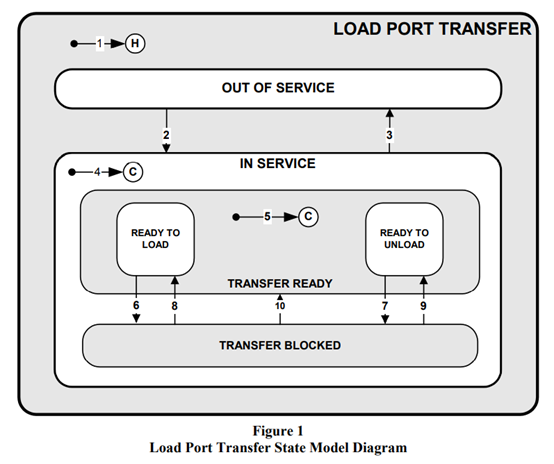
The State Model of the Load Port is one of the core parts of SEMI E87 CMS, which defines the behavior of the Load Port in different states. The State Model of a Load Port includes:
- Load Port Transfer State Model
The host view of the Load Port TRANSFER state is defined, including IN SERVICE, TRANSFER READY, READY TO LOAD, READY TO UNLOAD, and other states.
(Source: SEMI E87)
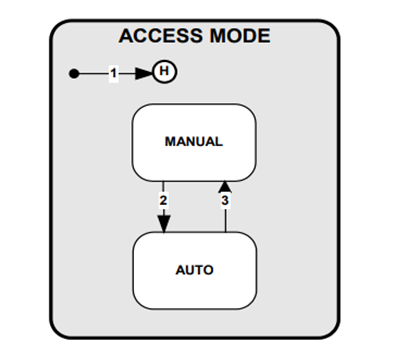
- Load Port Access Mode State Model
The access mode of the equipment is defined, including two modes: MANUAL and AUTO.
(Source: SEMI E87)
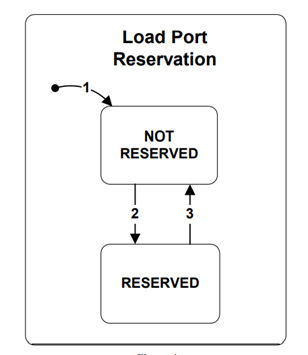
- Load Port Reservation State Model
Used to define the host view of future activity on a particular Load Port, including RESERVED and NOT RESERVED states.
(Source: SEMI E87)
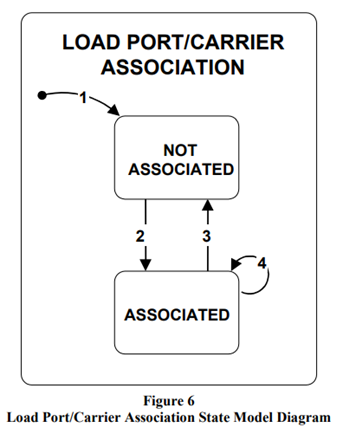
- Load Port/Carrier Association State Model
The Carrier association state with the Load Port is defined, including ASSOCIATED and NOT ASSOCIATED states.
(Source: SEMI E87)
Carrier State Model
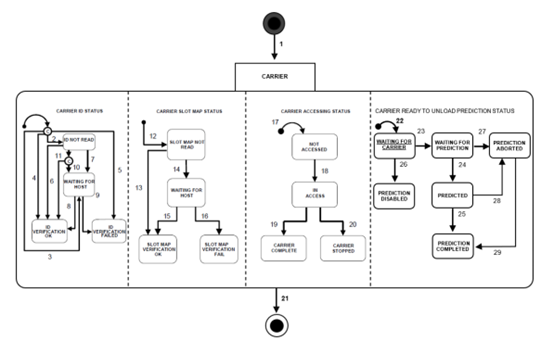
The Carrier State Model contains four concurrent sub-State Models to manage the different states of the Carrier:
(Source: SEMI E87)
- Carrier ID State Model
Manage the READ and verify states of CarrierID, including ID NOT READ, WAITING FOR HOST, ID VERIFICATION OK and ID VERIFICATION FAILED sub-states.
- Carrier Slot Map State Model
Manage the Carrier SLOT MAP READ and verify states, including SLOT MAP NOT READ, WAITING FOR HOST, SLOT MAP VERIFICATION OK and SLOT MAP VERIFICATION FAILED states.
- Carrier Accessing State Model
Manage the Carrier’s ACCESS status, including NOT ACCESSED, IN ACCESS, CARRIER COMPLETE, CARRIER STOPPED, etc.
- CRTU (Carrier Ready To Unload) State Model
Manage the PREDICTED states of Carrier ready to unload, including WAITING FOR CARRIER, WAITING FOR PREDICTION, PREDICTED, PREDICTION DISABLED, PREDICTION ABORTED, and PREDICTION COMPLETED status.
Carrier Object Attributes
Carrier object is one of the core objects in SEMI E87 CMS. It has several attributes to describe the state and behavior of Carrier. See table below:
| Property Name | Description |
| ObjType | Object type, the object type of the Carrier is “carrier”. |
| ObjID | Object identifier. |
| Capacity | The maximum number of substrates that can be carried in a Carrier. |
| CarrierIDStatus | The current status of the Carrier ID verification. |
| CarrierAccessingStatus | The carrier accessing status of the equipment currently being accessed. |
| ContentMap | An ordered list of identifiers and lot numbers for the substrate. |
| LocationID | Used to track the location information of the Carrier in the equipment, such as Load Port, internal buffer, etc. |
| SlotMap | Sorted list of slot states, states include UNDEFINED, EMPTY, NOT EMPTY, CORRECTLY OCCUPIED, DOUBLESLOTTED, CROSS SLOTTED states. |
| SlotMapStatus | The current status of the Slot map validation. |
| SubstrateCount | The current number of substrates in Carrier. |
| Usage | The type of material in the Carrier, such as Test, Dummy, Product, Filler, etc. |
| CaRTUPStatus | The predicted status of the Carrier ready to offload. This property is only required if the CRTU forecast is realized. |
| CaRTUPSettingTime | The predicted setup time at which the Carrier is ready to offload, used to notify the host when the Carrier is about to offload. |
| CaRTUPTimeOut | The predicted timeout for Carrier ready to offload, used to define the predicted maximum delay time. |
Carrier Verification Mechanism
SEMI E87 CMS defines two check mechanisms to ensure the uniqueness of Carrier and the accuracy of slot information:
- CarrierID verification: Ensure that the unique identifier of the Carrier is correct.
- Carrier Slot Map verification: ensure that the substrate information in the Carrier slot map is accurate.
The verification can be performed by the host or the equipment, depending on whether the host has provided the expected value. If the host provides the expected value, the equipment performs equipment-based validation; If the host does not provide the expected value, the equipment provides the host with the information required for host-based verification. For a more detailed explanation, please refer to the Verification Logic of E87 Carrier in the GEM300 series.
Services and Events
SEMI E87 CMS defines a variety of services and events for the interaction between the host and the equipment. These include:
- Bind
- CancelBind
- CancelCarrier
- CancelCarrierAtPort
- CancelCarrierOut
- ProceedWithCarrier
- CarrierRelease
- CarrierNotification
- CancelCarrierNotification
- CarrierRecreate
- CarrierTagReadData
- CarrierTagWriteData
- ChangeAccess
- ChangeServiceStatus
- ReserveAtPort
- CancelReservationAtPort
- CarrierIn
- CarrierOut
- CancelAllCarrierOut
In addition, SEMI E87 CMS also defines several events, such as Carrier Location Change Event, CarrierID Read Fail Event, etc., used for real-time monitoring of Carrier status change.
Operational Scenarios
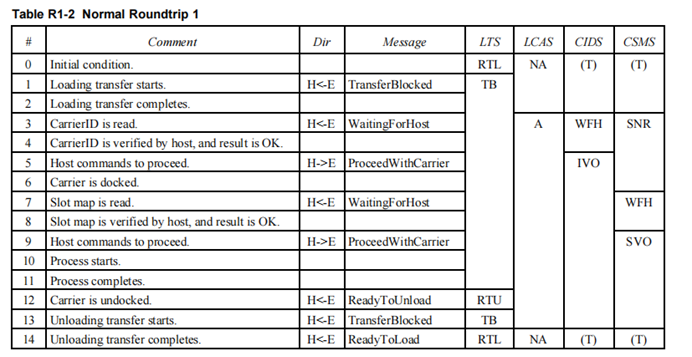
SEMI E87 CMS provides several sample process scenarios to help users understand the Carrier management process under different equipment configurations. These process scenarios provide practical reference for users to better understand and apply SEMI E87 CMS. Examples include:
(Source: SEMI E87)
Summary
SEMI E87 CMS is an important Carrier management standard in the semiconductor industry. By defining the interactive behavior between the host and the equipment, it ensures the Carrier’s efficiency and consistency in the transfer process.
To learn more about SEMI E87 solutions, please contact Support@kxware.com
For SEMI E87 standard document, please visit the SEMI site: https://www.semi.org/en/products-services/download-standards